


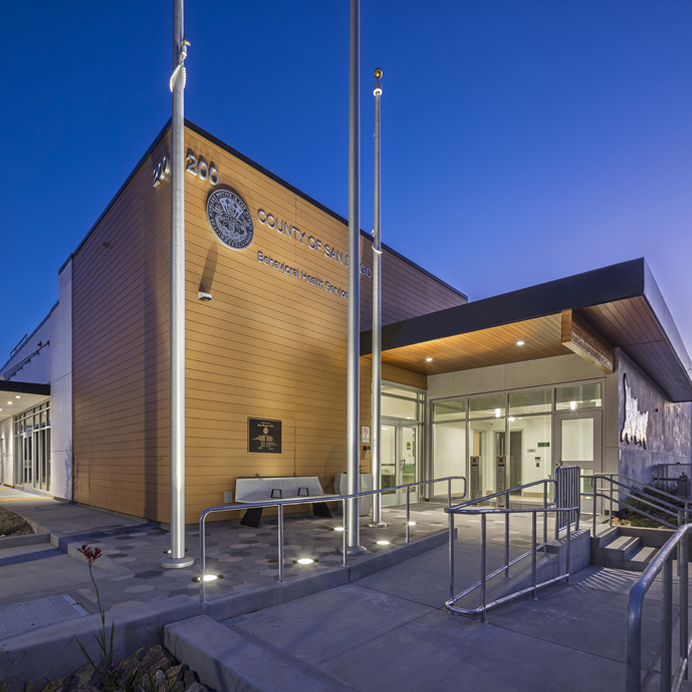
Designing Civic Wellness Care: Spaces for Dignity, Safety and Healing
Overview: Civic wellness care facilities play a critical role in supporting vulnerable populations, and thoughtful architecture can help advance their mission. Explore how designing for dignity, safety, serenity and durability creates environments that promote healing, stability and equitable access to care.
Mission-driven architecture combines the art of design with the purpose of making a positive impact on society. At Platt/Whitelaw Architects, it’s what we do.
Our architecture ranges widely to include schools, park facilities, community centers, libraries, houses of worship, life safety facilities, water and wastewater infrastructure and more.
Another important sector for us, and for which we have designed extensively, doesn’t have an official name. So, please allow us to suggest: Civic Wellness Care.
What is Civic Wellness Care?
We believe civic wellness care refers to spaces where municipalities can provide care for people needing extra support. These spaces include:
- Substance-use treatment centers
- Behavioral health facilities
- Crisis stabilization units (mental health support and treatment)
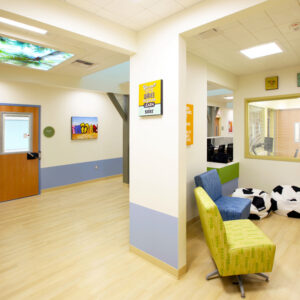
- Juvenile crisis assessment and stabilization centers
- Safe sleeping sites (for people living out of their vehicles)
- Homeless shelters / Sleeping cabins and sleeping pods
- Community resource centers (central locations for accessing social services)
Platt/Whitelaw is proud to have provided architectural services for all these uses.
Social Service & Civic Wellness Care
Social service is a common thread connecting this work. Providing equal access to opportunities and resources drives many communities to fund and operate civic wellness care.
When we design for such priorities, we design purposefully. We know the spaces themselves can be an important component in achieving the social goal.
Architectural Design for Dignity
Purposeful design in this application has many facets, one being designing for dignity. We understand that people may be interacting with these civic wellness care spaces on the worst days of their lives.
We find ways to counteract a person’s internal state of crisis by creating solution spaces.
For example, someone experiencing a mental health crisis may respond better if they have access to a safe outdoor, landscaped courtyard space rather than being immediately sent to a clinical exam room. In this application, an inviting courtyard can be a solution space.
For someone living out of their car, the solution space may be a safe sleeping site where they have access to a secure lot, clean bathrooms, laundry facilities and lockers.
Designing for dignity requires the architect to understand the specific challenges of the end users of the civic wellness spaces and the solutions that can bring meaningful improvement to their lives.
Architectural Design for Safety
Another facet of civic wellness care is designing for safety. For people experiencing housing insecurity, this can mean creating secure spaces for them and their belongings at shelters or safe sleeping sites.
At a substance use residential and treatment services (SURTS) center we designed, it meant designing walls around the courtyard that were too tall for anyone to toss over contraband but purposefully designing them to look like art rather than security.
Materials, technology and aesthetics can all be incorporated mindfully to keep occupants safe, sound and calm without creating an institutional feel.
Architectural Design for Serenity
Many studies have demonstrated that physical environments can produce neurological effects on people. According to Wikipedia, “the biophilia hypothesis (also called BET) suggests that humans possess an innate tendency to seek connections with nature and other forms of life.”
Korean researchers from the Department of Landscape Architecture, Hankyong National University and the Division of Forest Human Service Research, National Institute of Forest Science found that cortisol levels dropped noticeably during short-term exposure to indoor biophilic spaces compared to spaces that didn’t incorporate nature in their design.
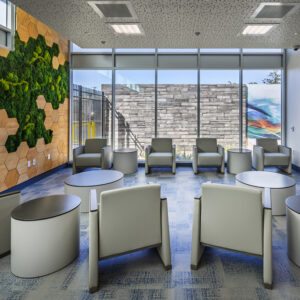
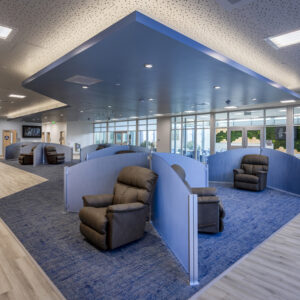
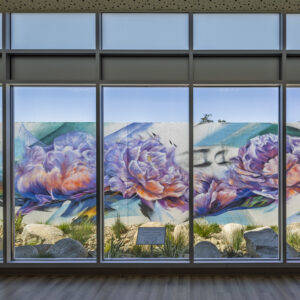
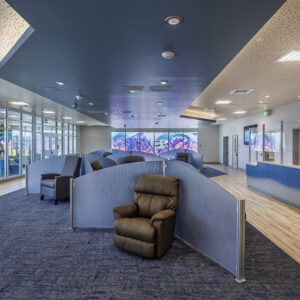
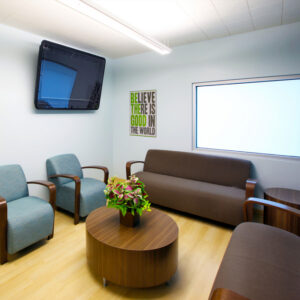
Biophilia factored strongly in our design for the Oceanside Crisis Stabilization Unit. In addition to incorporating a calming color palette, our design featured a living plant wall, landscaped courtyard and materials inspired by designs found in nature.
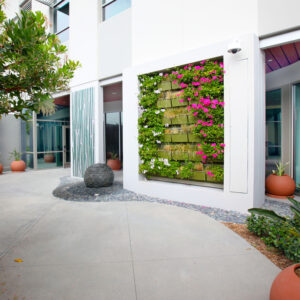
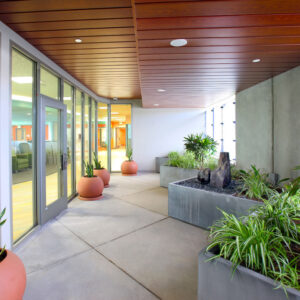
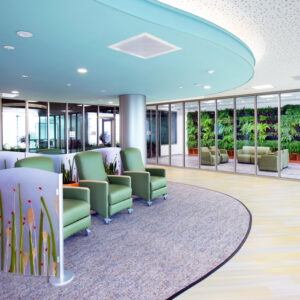
Dr. Luke Bergmann, Director of the County of San Diego’s Behavioral Health Services, said of the completed Oceanside Crisis Stabilization Unit:
“Our clients arrive in crisis and are greeted by a built environment purposefully designed to be therapeutic and promote healing through natural light, comfortable and relaxed seating and connections to nature. The CSU upends expectations for the kind of space where mental health crisis care happens; it makes clear that we value the humanity of the people we serve.”
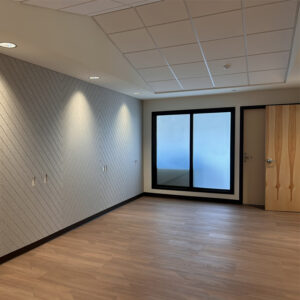
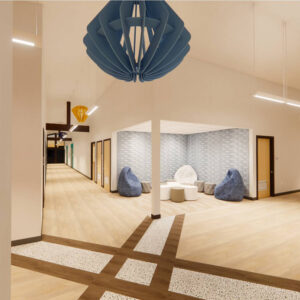
Another facet of designing for serenity is controlling for acoustics. The aforementioned SURTS center we designed includes a dormitory residential component. Excessive noise can disrupt a therapeutic environment, so we selected materials carefully.
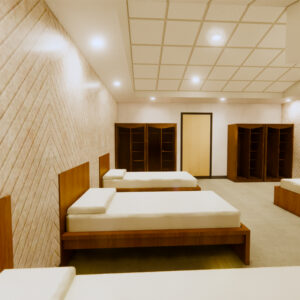
Restful sleep is important, and with four residents sharing each dormitory room, acoustic control was a key design consideration. Our research guided us to place acoustical panels (with an attractive book-matched pattern) on the wall at the head of the beds, rather than directly overhead.
We also incorporated acoustical clouds for calming aesthetics and to help improve sound quality in the long corridor and commons areas, as well as including a dedicated quiet room in our design.
Architectural Design for Durability
Finally, designing for dignity in civic wellness care means designing for durability. These publicly funded spaces need to last, operate efficiently and continue to look inviting years into the future.
Following sustainable design principles helps the architect:
- Select durable materials
- Orient and design the building for natural light and air flow
- Incorporate energy efficient mechanical systems and appliances
- Provide an environment that helps the user improve their health by providing comfortable spaces with better indoor air quality, natural light and connection to vegetation
For two of our projects, durability meant creating a second life for the buildings.
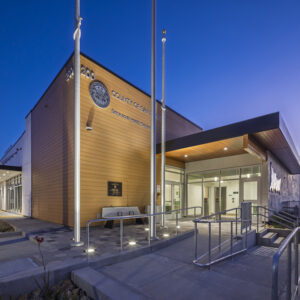
A Live Well facility we designed to house social services like probation, CalWORKs, Medi-Cal, childcare services and child welfare services, gave new life to shuttered bowling alley.
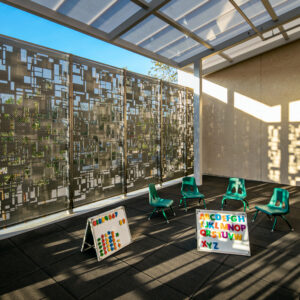
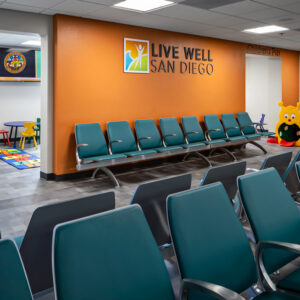
Rather than incur the expense and environmental impact of demolition, the County of San Diego chose to repurpose the building. For the remodel, we incorporated timeless, natural materials and a range of other sustainable features.
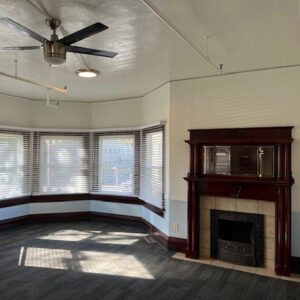
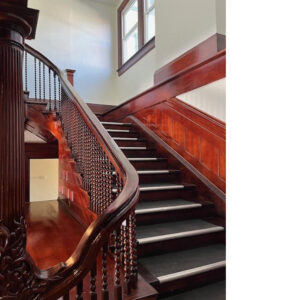
Similarly, our work for a women’s substance-use residential treatment facility required historic renovation for a large house originally built in 1895 and designed by noted architect Irving Gil.
In this case, we didn’t need to create a beautiful, safe space that can bring peace through a challenging experience. We just needed to provide historic restoration architecture so the building could continue to do that job for many more decades.

Civic wellness care may not yet be a widely recognized, cohesive category, but its impact is undeniable — and its importance will only continue to grow.
At Platt/Whitelaw Architects, we see this work as a natural extension of mission-driven design: Creating spaces that do more than function; they actively support healing, stability and human dignity.
By designing with intention — for dignity, safety, serenity and durability — we help communities care for their most vulnerable residents in meaningful, lasting ways. Ultimately, these environments are not just buildings; they contribute to a more compassionate and equitable society.
Designing for Civic Wellness Care FAQs
- What is civic wellness care architecture?
Civic wellness care architecture focuses on designing facilities that support vulnerable populations, including behavioral health centers, substance-use treatment facilities, homeless shelters, safe sleeping sites and community resource centers. These spaces are intentionally designed to promote healing, dignity, safety and access to essential services. - How can architecture support mental health and recovery?
Thoughtful architectural design can help reduce stress, improve comfort and create a sense of security. Features such as natural light, access to outdoor spaces, biophilic design elements, calming materials and welcoming environments can positively influence emotional well-being and support recovery. - What are the most important considerations when designing civic wellness care facilities?
Successful civic wellness care projects balance dignity, safety, serenity and durability. Architects must create spaces that are welcoming and therapeutic while also being secure, cost-effective to operate, sustainable and resilient enough to serve communities for many years.
Renderings and Photography:
SURTS Renderings: Platt/Whitelaw Architects
Oceanside Crisis Stabilization Unit: Bill Robinson Photography
Lemon Grove Live Well Center: Mike Torrey Photography
Crash House: Platt/Whitelaw Architects
East Region Crisis Stabilization Unit: Pablo Mason Photography
Mid-City Juvenile Crisis Center: Bill Robinson Photography