


Integrated Architecture and Interior Design: Creating Cohesive, Purpose-Driven Spaces
Supporting People, Purpose and Client Goals in Public Architecture
Offering in-house interior design services at our architecture firm means we can design from the inside out and the outside in. We can turn architectural elements into interior experiences and vice versa.
And usually, we do both in a seamless flow!
Designing for public and community-facing places means the range of people interacting with the buildings we design – and the buildings themselves – vary widely. Our design approach always has to be flexible and customized.
For example, we’ve designed several crisis stabilization units. This is a place where individuals having a mental or drug-induced crisis may be taken for evaluation and support. The interiors of these buildings need to have an instant calming effect, meaning the materials used need to respond to the building’s function.
These projects are a great opportunity for our interior design team to work side-by-side with our architectural team.
Taking our design direction from the desired outcome of emotional deescalation meant pulling the biophilic design we used for the interior through the exterior design as well. This influenced the color palette in and out, the decision to include an outdoor (but secured and connected) courtyard space, the strategic window placements and more.
360-Degree Architecture
At Platt/Whitelaw Architects, our team has tremendous respect for one another, which translates into dynamic and eager collaboration.
Our teams work on different aspects of the same project, but everything is coordinated from the outset and throughout the design process. This is key to both achieving our clients’ goals and creating a consistent design language for each project.
We cross-train our staff, as well. While Yumi Furukawa is a California Certified Interior Designer (CID) and National Interior Design Certified (NCIDQ), other architectural designers on our team work closely with her to support our interior design initiatives and learn from her vast experience.
With everyone here enthusiastic to expand their skill set, we maintain a culture that consistently encourages and nourishes curious minds.
What Role Does Interior Design Play in Architecture?
We believe that interior design is an extension of the architectural vision, not a separate phase. It can also help the client articulate their goals and vision early on.
“Clients need color, texture and three-dimensional space to really get excited about a project,” Yumi said.
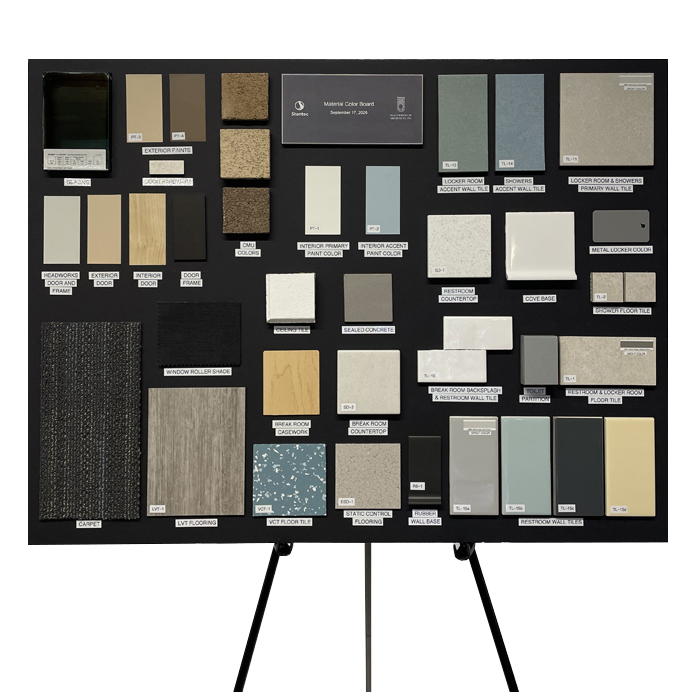
Being able to present a materials board (that displays small samples of proposed flooring material, paint colors, textiles and more) early in our design process helps our clients and architecture team communicate about the look and feel of a space, align expectations and establish a shared vision from the outset.
It also helps explain how we translate structural elements into interior experiences.
Here to Serve
We recently debuted our ‘Here to Serve’ tagline, but what does service-based architecture mean as it pertains to our multi-disciplinary design team?
For an architecture firm specializing in public and community-facing building design, it means curating a team that can advance the public’s interest, be mindful of our client’s fiduciary responsibilities and deliver design (both inside and out) seamlessly.
Offering in-house interior design services at our architecture firm helps us achieve these goals. It’s one more way we can deliver a cohesive architectural design story that responds to a building’s site, purpose, users and our client’s goals.